
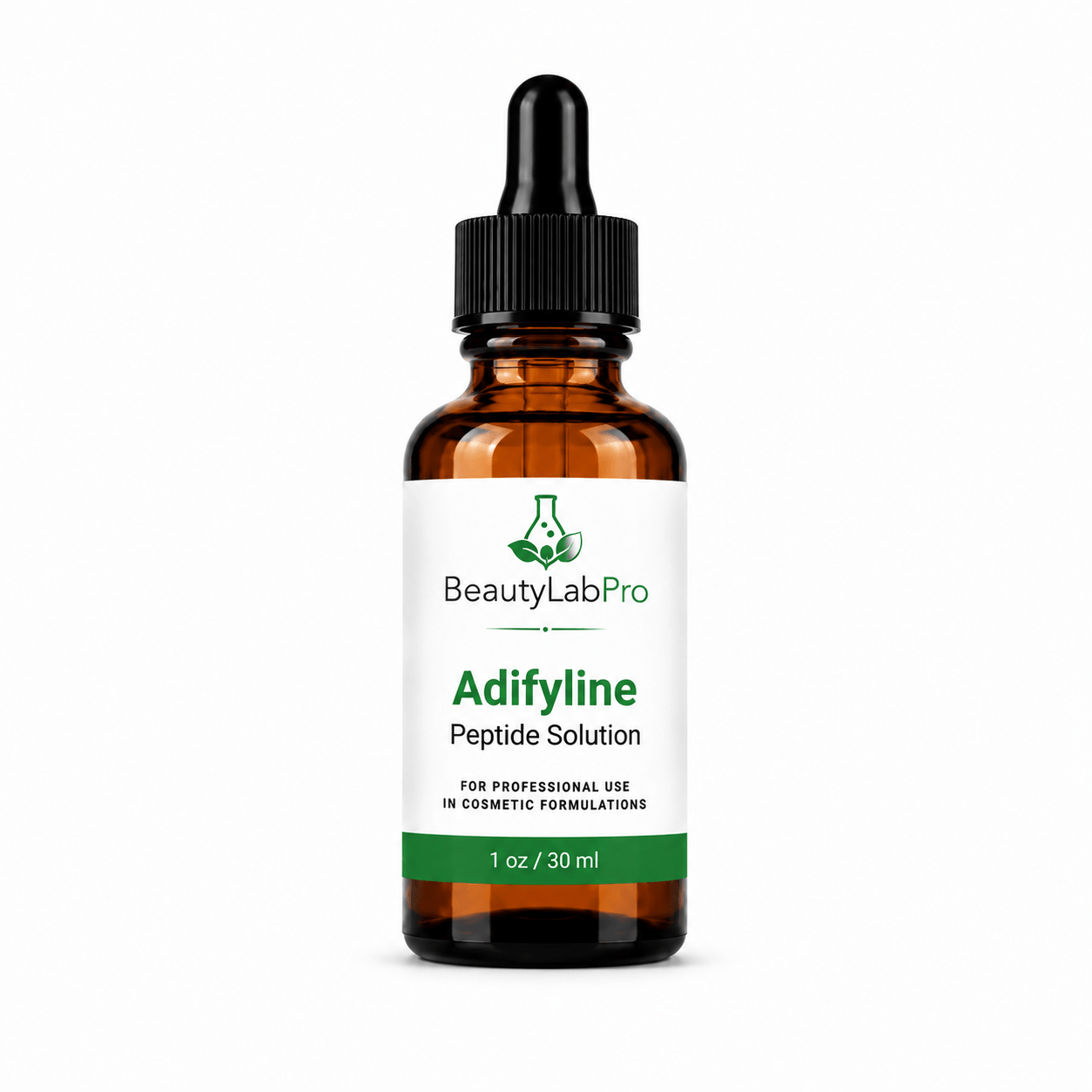
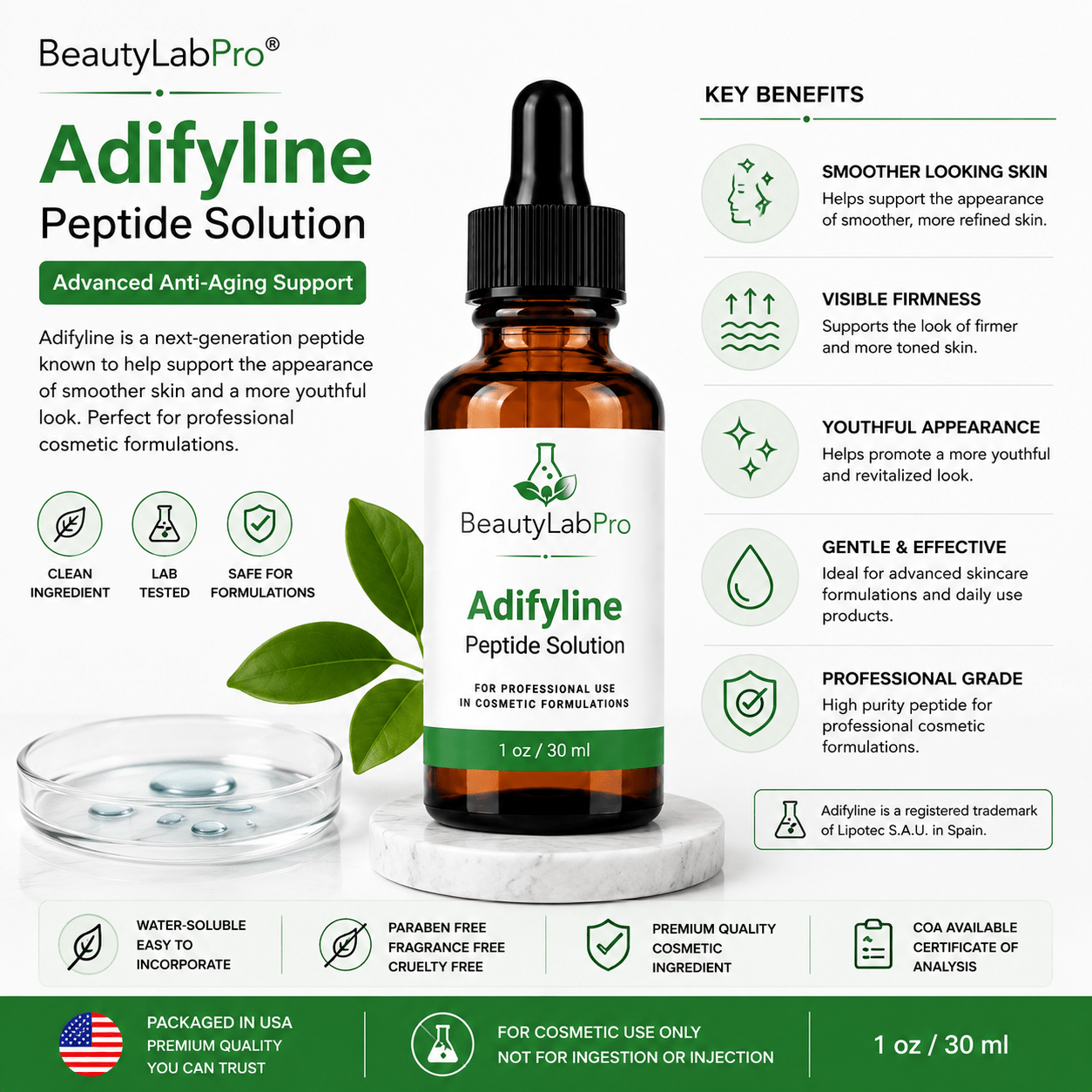
Adifyline Peptide Solution — Acetyl Hexapeptide-38
From $29.99
Adifyline Peptide Solution is a liquid Acetyl Hexapeptide-38 ingredient for professional facial and body-care formulation. It is intended for developing serums, creams and lotions. Confirm the supplied-grade composition and use instructions.
For cosmetic formulation use only.
What Is Adifyline Peptide Solution?
Adifyline® is the trade name for Acetyl Hexapeptide-38, a hexapeptide solution that’s fueling the “peptide therapy” conversation across skincare in 2026. Most peptides focus on collagen signaling or wrinkle relaxation. Adifyline, however, takes a different approach: it targets age-related volume loss, which gravity and natural fat-tissue thinning cause over time.
How Adifyline Works
Adifyline stimulates PGC-1α (peroxisome proliferator-activated receptor gamma coactivator 1-alpha), a pathway that drives healthy adipogenesis. In other words, it supports the process your skin naturally uses to maintain its own cushioning fatty tissue. In manufacturer in-vitro testing, this activation produced a 61.1% increase in PGC-1α expression. As a result, researchers also measured 32.4% greater lipid accumulation at the cellular level.
Clinical Results (Ingredient-Level Data)
- Facial volume: participants gained +12% cheek volume after just 14 days (22 female volunteers, ages 50–60)
- Body volume: participants showed up to 30x greater volume than the placebo group after 56 days (22 women, ages 25–40)
Keep in mind that these figures come from the manufacturer’s studies on the Acetyl Hexapeptide-38 raw ingredient, not from a finished BeautyLabPro product. Because of that, we share them here strictly for formulation and educational purposes. Always run your own stability and efficacy testing on your finished formula, and steer clear of unverified, body-altering claims — especially medical-sounding ones like “breast enlargement.”
INCI & Specifications
- INCI Name: Butylene Glycol, Water, Acetyl Hexapeptide-38
- Active concentration: 0.05% Acetyl Hexapeptide-38 in solution
- Appearance: clear, colorless to pale yellow liquid
- Solubility: water, ethanol, glycols
- Recommended use level: 2% of total formula
- pH range: 3.0–8.0
- Shelf life: 2 years unopened; store cool and dark
How to Use
Add Adifyline at 2% during the aqueous (water) phase of your formulation. If you’re building an emulsion, first let it form, then add the peptide once the mixture cools below 40°C (104°F) — this step protects it from heat damage. Once incorporated, Adifyline works well in serums, gel-creams, contour creams, and body butters.
Who It’s For
This ingredient suits three types of buyers: indie skincare brands and product developers, licensed estheticians who formulate in-treatment products, and experienced DIY formulators who want one well-documented volumizing peptide to build around.
FAQ
What is Adifyline peptide used for? Formulators use Adifyline (Acetyl Hexapeptide-38) in cosmetic products aimed at facial and body volumizing — think contour creams, plumping serums, and body treatments. It works by supporting your skin’s own fat-tissue maintenance process.
Is Adifyline the same as Acetyl Hexapeptide-38? Yes. Adifyline® is simply the trade name, while Acetyl Hexapeptide-38 is the INCI (chemical) name for the same active peptide.
What’s the difference between Adifyline and Matrixyl 3000? Matrixyl 3000 targets collagen signaling to boost firmness and reduce wrinkles. Adifyline, on the other hand, targets volume — it supports natural fat-tissue maintenance rather than collagen production. Because the two work through different mechanisms, many formulators pair them for a “firm + full” effect (see the bundle idea below).
Can I use Adifyline in a body butter or lotion? Yes. Since it dissolves in both water and glycols, it works well in the aqueous phase of emulsions at a 2% usage rate, across a pH range of 3.0–8.0.
Is Adifyline safe for DIY formulating? Formulators widely use this cosmetic ingredient, and it comes with published stability and usage data. That said, treat it like any raw active: patch-test your finished formulas and follow standard cosmetic-safety practice, including a solid preservative system, pH testing, and stability testing.
| Weight | 4 oz |
|---|---|
| Dimensions | N/A |
| Weight | 10 mL Sample, 1 oz (30 ml), 4 oz (118 mL), 8 oz (236 mL), 16 oz (473 mL), 32 oz (946 ml), 1 gal (3.78 L) |
Be the first to review “Adifyline Peptide Solution — Acetyl Hexapeptide-38”
Related products

Active Ingredients

Active Ingredients
Active Ingredients
Peptides
Reviews
There are no reviews yet.