Formulation Guides
Copper Peptides in Skincare Formulation: GHK-Cu Compatibility, Pairing and Common Mistakes
Sep
Copper Peptides in Skincare Formulation: GHK-Cu Compatibility, Pairing and Common Mistakes
Copper peptides remain one of the most visible peptide stories in 2026 skincare. Industry coverage continues to highlight Copper Tripeptide-1 among next-generation peptide ingredients, while formulators are increasingly expected to explain not only what an active is, but how its exact grade fits into a stable finished formula.
What is Copper Tripeptide-1?
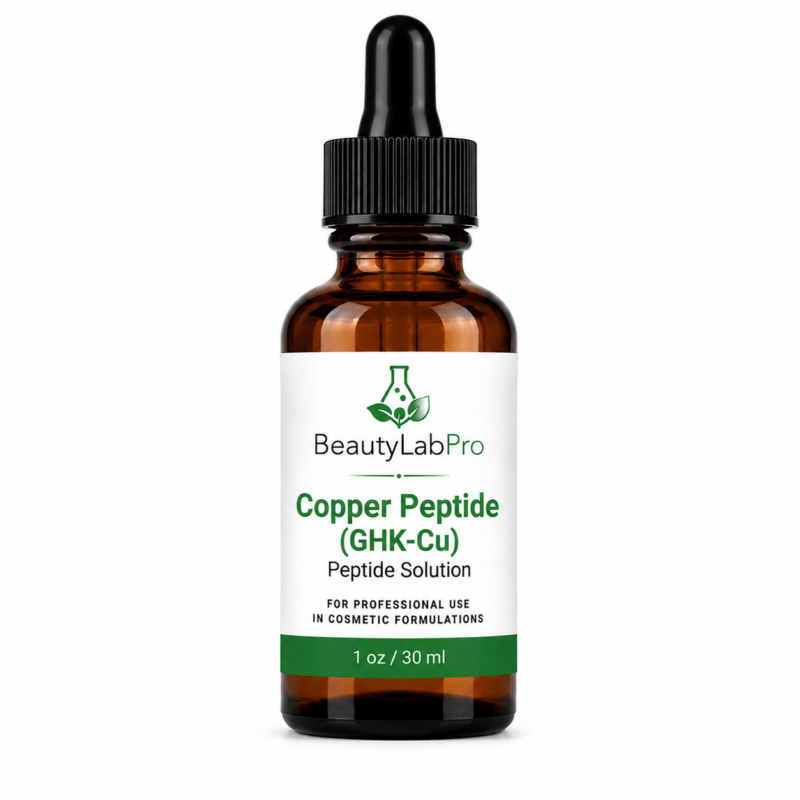
Copper Tripeptide-1, commonly discussed as GHK-Cu, is a copper-containing cosmetic peptide used in professional skincare formulation. BeautyLabPro supplies a Copper Peptide (GHK) Peptide Solution for formulators working with water-based cosmetic systems.
The key distinction is important: a raw cosmetic ingredient or concentrated ingredient solution is not the same thing as a finished facial serum. The final formula still needs an appropriate vehicle, preservation system, packaging, stability testing and a defensible use level.
Why compatibility questions matter more than trend claims
“Can I mix copper peptides with another active?” sounds like a yes-or-no question, but professional formulation rarely works that way. Compatibility can depend on the peptide grade, carrier, concentration, pH, chelators, electrolytes, preservative system and processing conditions.
Do not copy a use rate from another supplier
Two products with the same headline INCI can arrive in different carriers or at different active concentrations. Always use the COA and TDS for the exact batch or grade you purchased when deciding addition level, processing temperature and pH window.
Build the formula around the complete system
When combining GHK-Cu with humectants, other peptides, vitamins or botanical materials, evaluate the entire formula rather than judging compatibility from ingredient names alone. Check clarity, color, odor, viscosity and pH over time, then run the stability and microbial testing appropriate to your product.
Three common GHK-Cu formulation mistakes
1. Treating a concentrate like a finished serum
A professional ingredient solution is designed to be incorporated into a formula. It should not automatically be treated as a ready-to-use consumer product.
2. Assuming every peptide likes the same process
Peptides are not one uniform ingredient class. Supplier documentation should determine the appropriate phase and processing conditions for each grade.
3. Chasing the highest percentage
More is not automatically better. A useful formulation target is a stable, well-preserved product with a rational active level supported by the technical documentation for the material. For a deeper 2026 buyer/formulator perspective, read Copper Peptide Concentration vs Formulation Quality.
How to build a peptide formulation workflow
Start with the product brief and target format. Select the peptide grade, review its COA/TDS, design the vehicle, establish a compatible preservation strategy, make a controlled bench batch, then evaluate pH, viscosity, appearance and stability. Only after that should you finalize claims and scale-up parameters.
For additional peptide options, browse the BeautyLabPro Peptides collection.
Shop professional Copper Peptide ingredients
BeautyLabPro supplies cosmetic raw materials for formulators, indie brands and product developers. View Copper Peptide (GHK) Peptide Solution. Free standard U.S. shipping is available on qualifying orders of $69+.
If a multi-active system becomes cloudy, stringy or unstable, use our serum formulation troubleshooting guide before changing the formula at random.
For cosmetic formulation use only. Formulators are responsible for finished-product compatibility, stability, safety and regulatory compliance.