
Product Development Guides
Dark Spots and Uneven-Looking Tone: Formulating an Even-Tone Serum
Oct
Why dark spots are the top tone complaint
Dark spots and uneven-looking tone sit near the top of every list of skin worries, in every market and for every skin type. Clients describe sun spots on the cheeks and hands, marks left after breakouts, patchy areas on the forehead and upper lip and a general dull, uneven look that makeup has to hide. Estheticians hear about it after every summer, and many clients now search for a serum they can use at home between facials.
For a brand, an even-tone serum is one of the strongest products in a range. It is used every day for months, buyers come back for a second and third bottle, and it pairs naturally with sunscreen, gentle exfoliation and in-clinic treatments. At the same time, shoppers read labels more carefully than ever, so a clear active story and honest, cosmetic claims are what make the product trustworthy.
What makes skin tone look uneven
Skin color comes mostly from melanin. Sun exposure, marks left after blemishes, hormonal changes, friction and simple aging can all make melanin look concentrated in some areas and not in others, so the face or hands look spotty, sallow or dull. Spots often look darker after the summer and lighter in winter, which is why autumn is a natural season to launch or promote a tone product.
Keep the explanation in cosmetic language. An even-tone serum can help skin look brighter and more uniform and make the look of dark spots less visible. It does not treat melasma or any skin condition, and your copy should suggest professional advice for spots that change in size, shape or color.
Building the base
Most even-tone serums are light water-based gels or fluid emulsions. A water gel gives the clean, transparent look many buyers expect, while a light emulsion allows antioxidants carried in oil and suits drier skin. Humectants such as glycerin and a hyaluronic acid gel keep the texture comfortable, because skin that feels tight or flaky looks duller and makes spots more noticeable.
Leave out strong fragrance and keep the formula short. Brightening actives are often sensitive to light and air, so plan for opaque or airless packaging from the first pilot batch, not as an afterthought. A simple, stable base lets the actives do their job and gives you clean data in stability tests.
Peptides and actives for an even-looking tone
Peptides give an even-tone serum a modern story that is different from the classic list of acids and vitamin C. Tetrapeptide-30 Peptide Solution is a clear, viscous liquid in glycerin and water that is added below 40°C in emulsions or straight to the water phase in cold-process products. Its listing gives a usage rate of 0.5 to 5 percent, and the supplier reports in vivo work at 2.5 percent of the solution with a more even-looking tone after four weeks and less visible age spots after eight weeks. The supplier also notes better results when it is combined with sodium ascorbyl phosphate, which makes it a strong partner for a vitamin C derivative.
Oligopeptide-34 for spot-focused products
Oligopeptide-34 Peptide Solution is a ready liquid positioned for brighter, more even-looking skin and less visible dark spots, which makes it a natural hero for glow serums and targeted spot creams. Its INCI and input level are batch-specific, so take both from the documentation for your lot before you calculate the recipe. Brands that want a broader peptide story can compare it with the other liquid peptides in the peptide solutions collection.
Glutathione as an antioxidant brightener
Glutathione is one of the most searched brightening names online. Glutathione Peptide Powder is a white, water-soluble tripeptide with a suggested use level of 0.5 percent, dissolved in the water phase at room temperature and added at cool-down. Reduced glutathione oxidizes over time and can develop a sulfur note, so many brands sell it as a powder-to-serum kit or in small airless bottles and make fresh batches more often.
Stability, color and packaging
Tone serums show every stability problem quickly. Add actives one at a time in small pilot batches, mix gently to avoid trapping air, and watch color, smell, clarity and pH over several weeks at room temperature and in a warm cabinet. A serum that slowly turns yellow or develops an off note tells you that oxidation needs more attention, through an antioxidant system, less headspace or a better pack.
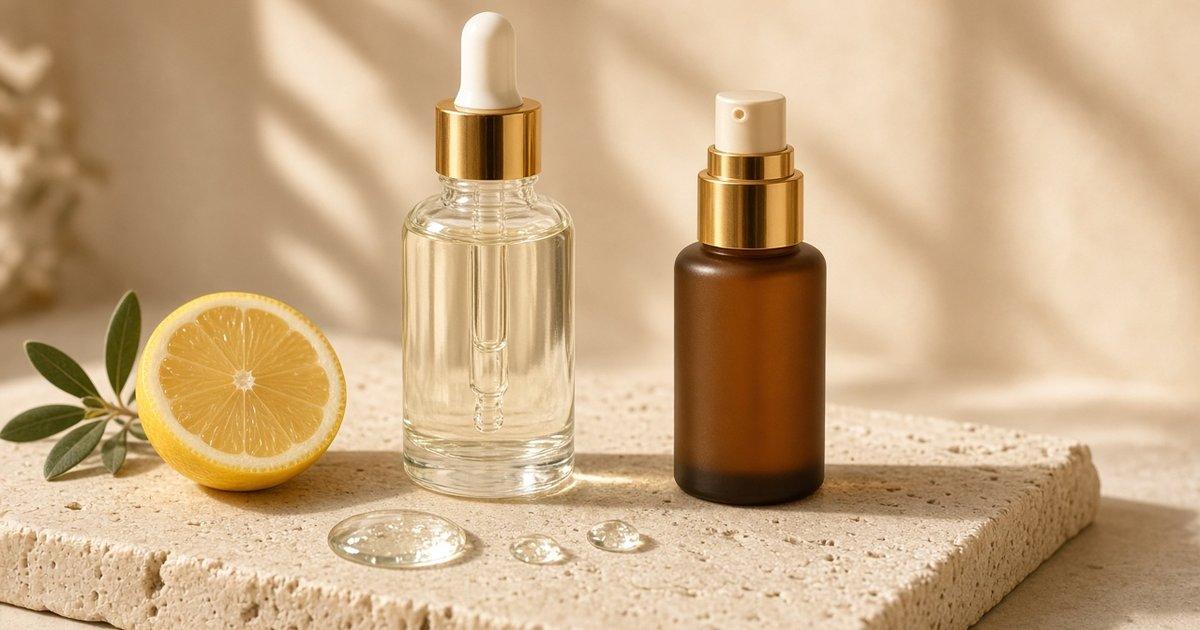
Airless pumps and opaque bottles protect light-sensitive and air-sensitive actives and also look premium on a shelf. Fill a size that clients finish within a few months, so the last drops perform like the first and the reorder comes on time.
How clients use it and how to position it
Consistency matters more than strength. Suggest applying the serum once or twice a day to clean skin, following with moisturizer and, in the morning, a broad-spectrum sunscreen every single day. Without daily sun protection, any tone product will struggle to show a visible difference, and saying so openly builds trust.
In clinics and salons, an even-tone serum works well as a take-home product after peels, enzyme treatments and professional facials once the skin has settled. Position it as part of a calm routine with sunscreen and gentle exfoliation, not as an overnight fix.
Claims and testing
Keep claims in appearance language: skin looks brighter, tone looks more even, dark spots look less visible, the complexion looks more radiant. Avoid words such as removes pigmentation, bleaches, whitens, treats melasma or cures. Request INCI, CoA and TDS for every raw material, stay inside each supplier’s recommended range and run a dermatologist-supervised safety test before launch. Standardized photos taken in the same light at the start and after eight to twelve weeks, plus a consumer perception study, give you honest claims and strong marketing images.
FAQ
Which peptides are used in serums for dark spots?
Common choices are Tetrapeptide-30 and Oligopeptide-34, often combined with an antioxidant such as glutathione or a vitamin C derivative for a more even-looking tone.
Can peptides replace vitamin C in an even-tone serum?
They can be the hero of a vitamin C free formula, but many brands combine both. The supplier of Tetrapeptide-30 reports better results together with sodium ascorbyl phosphate.
How long does it take to see a more even-looking tone?
Skin can look brighter within a few weeks, while the look of dark spots is usually judged after eight to twelve weeks of daily use together with daily sunscreen.
Why does a glutathione serum change color or smell?
Reduced glutathione oxidizes on contact with air and can develop a sulfur note. Small batches, an antioxidant system and airless packaging help keep it fresh.