
Product Development Guides
Forehead and Frown Lines: Formulating an Expression Line Serum
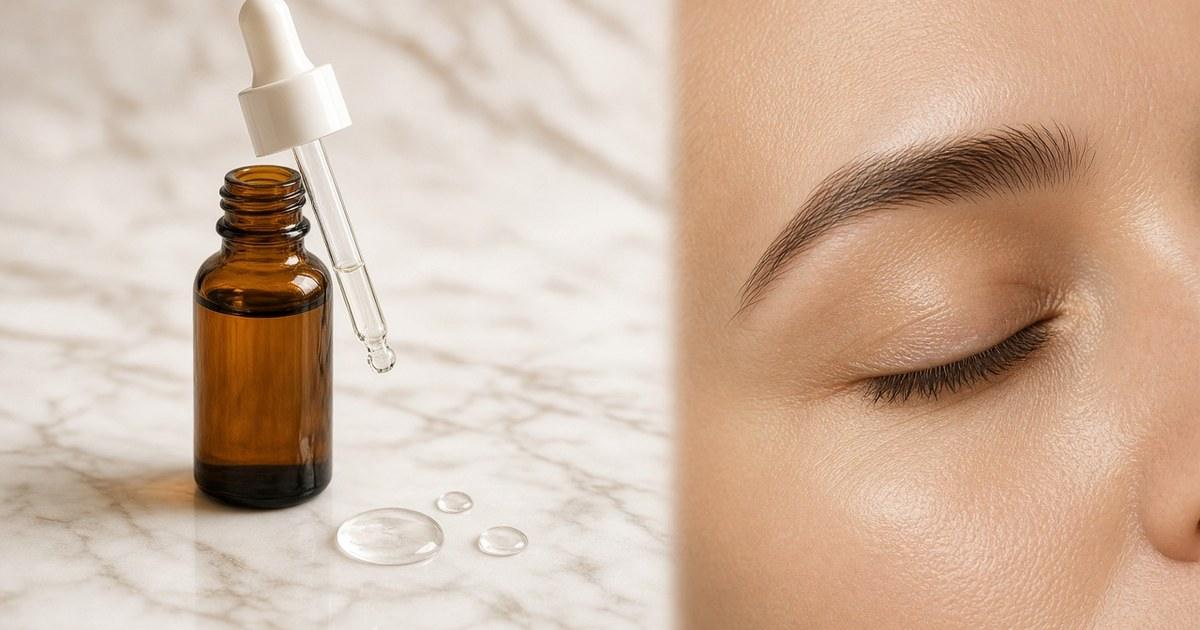
Oct
Why expression lines are the most requested concern right now
Forehead lines, the vertical lines between the brows and the fine lines at the outer corners of the eyes are the first signs of aging that many people notice, often in their late twenties. Unlike sun spots or dullness, they appear in the parts of the face we move most, so they show on video calls, in selfies and in close conversation. Searches for forehead line serums, frown line products and peptide alternatives to professional treatments keep growing, and clients increasingly ask estheticians what they can use at home between appointments.
That makes a targeted expression line serum one of the clearest products a brand or a treatment room can offer. The concern is specific, the application area is small, and the client usually already understands the idea of peptides. The challenge for the formulator is to build a product that feels pleasant, stays stable and is described honestly, without promising what only professional procedures can deliver.
What makes expression lines look deeper
Expression lines form where the skin folds again and again when we frown, raise our brows, squint or smile. Early on they are visible only while the face moves. Over time, as skin loses some of its bounce and moisture, they stay visible when the face is at rest. Dehydration makes them look sharper, sun exposure makes the surrounding skin look rougher, and habits such as squinting at screens repeat the same movement thousands of times a day.
Keep the explanation in cosmetic terms. A serum can help these lines look softer and the skin look smoother and better hydrated. It does not freeze movement, replace professional aesthetic treatments or change the structure of the face, and the copy should say so plainly. Clients who have already tried several products trust a brand that sets realistic expectations.
Choose a base that suits a targeted product
Most expression line products are light water-based serums or gels, because they are applied to small areas several times a day and often under makeup. A clear gel or a fluid serum spreads precisely over the forehead and between the brows, dries quickly and does not leave a shine that makes texture more noticeable. For the eye area, a slightly richer gel-cream gives comfort to thinner, drier skin while still sitting well under concealer.
Hydration is part of the visible result. Well hydrated skin reflects light more evenly, and fine lines look less defined within minutes of application. Humectants, a light film former and a small amount of soothing ingredients give the client an immediate feel of smoothness, which keeps them using the product long enough to judge how their skin looks over several weeks.
Peptides used for the look of expression lines
Expression line peptides are popular because they are water soluble, used at low levels and easy to add to a clear base at the cool-down stage. The most familiar choice is Argireline Peptide Solution, a liquid concentrate of Acetyl Hexapeptide-8 that is widely used in light serums and in forehead and eye-area products. Its supplier states a use level of 3 to 10 percent of the solution in the finished product, so work inside that range and confirm it with the documentation for your batch.
Building a multi-peptide blend
Many brands combine more than one expression line peptide so the product has a stronger story and a fuller ingredient list. A frequent partner is SNAP-8 Peptide Solution, a water-soluble liquid form of Acetyl Octapeptide-3. Because a solution and a powder carry different carriers and active levels, never transfer a powder use level to the liquid; calculate the amount from the specifications of your lot.
Adding a recognizable trade name
Some formulators add Syn-Ake Peptide Solution to give the product a third well-known name on the label. Its listing does not publish an INCI, active concentration or use level, so request the technical sheet before you write the formula and the ingredient list. When you combine three peptides, check the total amount of glycerin, glycols and preservatives that each carrier brings, because together they can change the feel of the serum and the overall preservation. You can compare other options for the look of lines and firmness in the peptides collection.
Supporting ingredients and stability
An expression line serum works best as a simple formula. A hydrating base, the peptide blend and one or two supporting ingredients for the look of firmness or radiance are usually enough. Strong acids and high levels of reactive actives are better placed in a separate product, because they make stability harder to control and can leave the skin feeling sensitive, which works against the calm, smooth finish clients expect. Run stability in the final package, check viscosity and clarity over time, and use opaque or airless packaging when the formula includes ingredients that are sensitive to light or air.
How the product is used and positioned
Directions matter for a targeted serum. Suggest applying a small amount morning and evening to clean skin on the forehead, between the brows and at the outer corners of the eyes, gently pressing it in rather than rubbing, then following with moisturizer and a daily broad spectrum sunscreen in the morning. A dropper bottle or a small airless pump gives a controlled dose, and a roller or precision tip suits on-the-go use.
In the treatment room, an expression line serum fits naturally as a take-home product after facials and as a maintenance step between professional appointments. Present it as part of a routine that also includes sun protection and good hydration, not as a standalone fix.
Claims and testing
Keep claims in appearance language: expression lines look softer, the forehead looks smoother, skin feels hydrated and supple. Avoid words such as relax muscles, freeze, paralyze, treat, repair or needle-free alternative to injections. Request INCI, CoA and TDS for every raw material, stay within each supplier’s recommended range and run a patch test before launch. An in-use study on people who actually have visible forehead and frown lines, with photos taken in the same light and the same facial expression, gives you honest claims and strong marketing images.
For a related formulation topic, see our Acetyl Octapeptide-3 vs Acetyl Hexapeptide-8 comparison.
FAQ
Which peptides are used in expression line serums?
Common choices include Acetyl Hexapeptide-8, sold as Argireline, and Acetyl Octapeptide-3, sold as SNAP-8, often combined with a third peptide such as Syn-Ake for a multi-peptide formula.
Can a peptide serum replace professional aesthetic treatments?
No. A cosmetic serum can help expression lines look softer and the skin look smoother and better hydrated, but it does not replace professional procedures and results vary from person to person.
Can expression line peptides be combined in one formula?
Yes, many serums use two or three of them together. Check the carrier, active level and recommended range of each solution, and confirm stability of the finished product in its final package.
How long before a client sees a difference?
Hydration makes lines look softer right after application, while changes in how the skin looks over time are usually judged after several weeks of consistent morning and evening use with daily sunscreen.