Formulation Guides
Guarana Extract Powder for Scalp Formulas: Caffeine-Rich Botanical Compatibility and Common Mistakes
Sep
Scalp care is being formulated more like skin care in 2026. Formulators are increasingly building lightweight scalp tonics, serums and treatment-style products around hydration, sensorial quality and carefully selected actives. Caffeine remains part of that conversation, but a caffeine-containing botanical such as guarana extract is not interchangeable with purified caffeine.
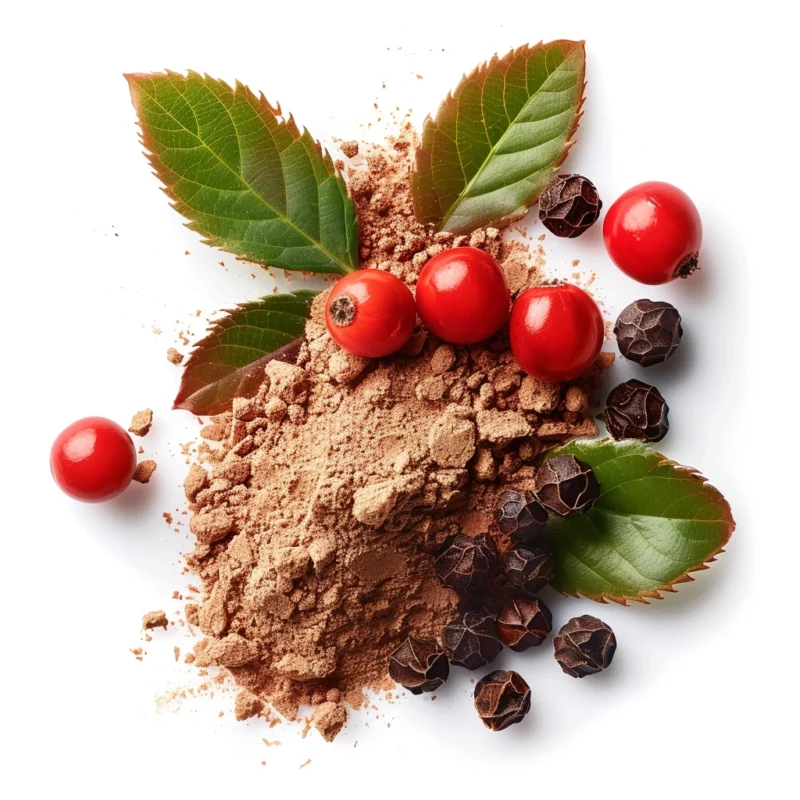
This guide focuses on the formulation questions that matter before using BeautyLabPro Guarana Extract Powder 4:1. It is a cosmetic raw material for formulation use, not a finished scalp serum.
Why formulators are looking at caffeine-rich botanicals for scalp care
Recent scalp-care development is moving toward “skinification”: products are expected to feel elegant, layer well, and support the condition and appearance of the scalp and hair. Caffeine-containing ingredients also continue to appear in contemporary hair-and-scalp formulation research and patent activity. That makes guarana commercially interesting, but the right starting question is not “how much caffeine should I add?” It is “what exactly is in this extract grade, and how will that grade behave in my system?”
Guarana extract is not the same thing as pure caffeine
Guarana is a botanical extract with a broader composition than a single purified molecule. The extract ratio, carrier or processing method, assay, color, odor, particle behavior and actual caffeine content can vary by supplier and lot. A formula developed around pure caffeine therefore cannot be copied gram-for-gram using guarana powder.
Check the batch documentation first
Before setting a use level, confirm the exact BeautyLabPro lot documentation available for the material. Use the supplier or batch TDS/COA to confirm identity, assay where specified, solubility guidance, storage conditions and any processing limits. Do not infer a universal caffeine percentage from the words “Guarana Extract Powder 4:1.”
Where guarana powder can fit in a scalp formula
Guarana extract can be evaluated for water-based scalp tonics, lightweight gels, emulsions and rinse-off hair-care systems when the exact grade is compatible with the intended base. The best format depends on the extract’s real solubility and the finished product’s preservation, viscosity, pH and sensory requirements.
Water-based tonics and scalp serums
For a clear or translucent tonic, first determine whether the powder dissolves cleanly at the target concentration. Botanical powders can contribute color, haze or sediment even when the functional components are dispersible. Make a small bench batch and inspect it after initial mixing, 24 hours, and through an appropriate stability program.
Gels and emulsions
In a gel or emulsion, the extract must be evaluated against the complete system rather than in water alone. Electrolytes, polymers, surfactants and other actives can change viscosity or clarity. Add the ingredient according to the exact TDS rather than assuming a universal hot-process or cool-down procedure.
Compatibility questions to answer before scaling
1. Does the extract stay uniform?
Watch for sediment, floating particles, crystallization, ring formation or color migration. A formula that looks acceptable immediately after mixing may change during storage.
2. Does it affect the preservative system?
Botanical extracts add formulation complexity. Preservation should be selected for the entire finished product and validated with appropriate testing; the extract itself does not replace a preservation strategy.
3. Does the color work with the product concept?
Natural extracts may shift the appearance of a clear scalp serum. That can be acceptable in a professional botanical concept, but it should be intentional rather than discovered after packaging.
4. Is the formula overloaded with scalp actives?
More actives do not automatically create a better scalp product. If you combine a caffeine-rich botanical with peptides, humectants or other complexes, build one compatibility layer at a time and document each change.
Common guarana formulation mistakes
- Treating 4:1 as a caffeine assay. An extract ratio is not a universal active-content declaration.
- Copying a pure-caffeine formula. Guarana is a multi-component botanical raw material.
- Ignoring color and sediment. Botanical appearance is part of stability and consumer acceptance.
- Skipping preservation testing. A botanical extract can change the challenge presented to the finished system.
- Making hair-growth drug claims. Cosmetic positioning should focus on scalp and hair appearance, conditioning and the intended cosmetic function of the finished product.
Can guarana be paired with peptide scalp ingredients?
Potentially, but compatibility must be tested for the exact grades involved. Peptide raw materials can have their own requirements for pH, temperature, carrier system and processing. If you are developing a multi-active scalp concept, the BeautyLabPro Biotinoyl Tripeptide-1 scalp formulation guide explains why peptide powders should be handled from their own batch documentation rather than by generic internet percentages.
A practical bench-development workflow
- Review the exact guarana batch TDS/COA.
- Define the product format: tonic, gel, emulsion or rinse-off system.
- Run a small solubility/dispersion screen in the intended phase.
- Add the extract to a simple base before stacking additional actives.
- Record appearance, odor, pH and viscosity where relevant.
- Evaluate packaging compatibility and preservation.
- Complete appropriate stability and safety testing before commercialization.
Shop Guarana Extract Powder for cosmetic formulation
BeautyLabPro supplies Guarana Extract Powder 4:1 for cosmetic formulation and product development. Confirm the exact lot documentation before finalizing use level, processing conditions or compatibility decisions.
Build your next scalp or botanical formulation with professional raw materials from BeautyLabPro. Free standard U.S. shipping on qualifying orders $69+.