Product Development Guides
Peptide Powder vs Peptide Solution: How to Choose the Right Format for Cosmetic Products
Sep
One of the most useful peptide questions is also one of the most misunderstood: should a product developer buy a concentrated peptide powder or a ready-to-use peptide solution? The answer depends on control, equipment, batch documentation and the product you are building—not on which format sounds stronger.
Short answer: Peptide powder gives more control over carrier and concentration; a peptide solution is easier to add but brings its own solvent, carrier and preservation components. 1% powder is not the same as 1% solution. Check assay, full INCI, solubility, processing and preservation before substituting.
The core difference
A peptide powder is a concentrated raw material. A peptide solution is a supplied liquid system that can include solvent, carrier and preservation components. Two products sharing a peptide name can therefore deliver very different amounts of active material per gram.
When peptide powder makes sense
Powder is attractive when you need direct control over carrier selection and final active delivery, or when you are developing a formula from the raw-material level. Browse the BeautyLabPro Peptide Powders collection.
What powder requires from the product developer
You need reliable weighing, correct dissolution, appropriate preservation, and stability testing. The exact assay, solvent system, pH window and processing conditions should come from the supplied batch TDS/COA.
When a peptide solution makes sense
A supplied liquid concentrate can simplify weighing and incorporation, especially for small laboratories and development batches. Explore BeautyLabPro peptide ingredients.
Why 1% powder is not the same as 1% solution
The percentage of a supplied ingredient and the percentage of peptide active are different calculations. A solution may be diluted; a powder may also have an assay below 100%. Calculate from the actual batch specification rather than copying a recipe from another grade.
Five checks before substituting one format for another
Assay
Confirm how much target peptide the supplied material actually contains.
Full INCI
A liquid grade may introduce solvents, humectants or preservatives that change your finished formula.
Solubility
Confirm the exact grade’s solvent requirements.
Processing conditions
Temperature and pH limits can vary by material and supplier.
Preservation and stability
Changing from powder to solution changes the water and preservative load of the system and may require new stability work.
A practical BeautyLabPro example
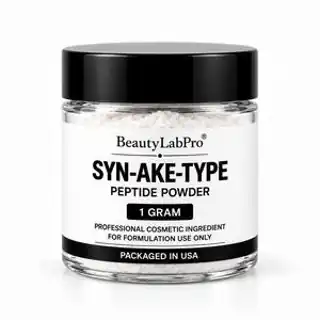
Product developers comparing formats can review Syn-Ake-Type Powder — 1 g alongside the Syn-Ake Peptide Solution. Handle each as its own raw material and work from its exact documentation.
Related guides: Palmitoyl Tripeptide-38 vs Matrixyl 3000-Type: What Cosmetic Product Developers Should Compare and Oil-Soluble vs Water-Soluble Peptides: How Product Developers Choose the Right Phase.
Shop by product format
Choose the format that fits your process, then validate the finished formula. BeautyLabPro offers free standard U.S. shipping on qualifying orders of $69+.
For cosmetic product use only. Always follow the documentation for the exact supplied grade and batch.
FAQ
What is the core difference between peptide powder and solution?
A peptide powder is a concentrated raw material. A peptide solution is a supplied liquid system that can include solvent, carrier and preservation components. Two products sharing a peptide name can therefore deliver very different amounts of active material per gram.
When does peptide powder make sense?
Powder is attractive when you need direct control over carrier selection and final active delivery, or when you are developing a formula from the raw-material level. Browse the BeautyLabPro Peptide Powders collection. You need reliable weighing, correct dissolution, appropriate preservation, and stability testing.
When does a peptide solution make sense?
A supplied liquid concentrate can simplify weighing and incorporation, especially for small laboratories and development batches. Explore BeautyLabPro peptide ingredients.
Is 1% powder the same as 1% solution?
The percentage of a supplied ingredient and the percentage of peptide active are different calculations. A solution may be diluted; a powder may also have an assay below 100%. Calculate from the actual batch specification rather than copying a recipe from another grade.