
Formulation Guides
X50 Myocept vs Acetyl Tetrapeptide-2: Choosing a Peptide System for Firming and Expression-Line Formulas
Sep
X50 Myocept vs Acetyl Tetrapeptide-2: Choosing a Peptide System for Firming and Expression-Line Formulas
Two peptide ingredients can both fit an advanced skincare brief while requiring very different formulation decisions. X50 Myocept is a specialized peptide delivery system built around Palmitoyl Hexapeptide-52 and Palmitoyl Heptapeptide-18, while Acetyl Tetrapeptide-2 is a separate peptide solution typically positioned in firming and elasticity-focused cosmetic concepts.
The choice should start with product architecture and supplier documentation—not with the assumption that the two ingredients are interchangeable.
What Is X50 Myocept?
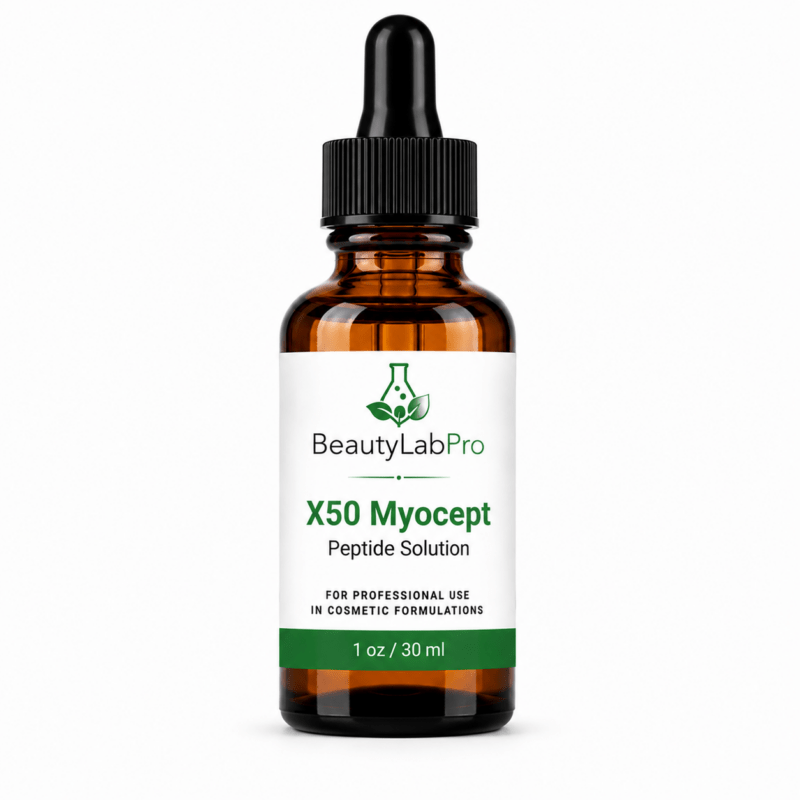
BeautyLabPro X50 Myocept Peptide Solution is a water-based cosmetic ingredient system designed for professional formulation. BeautyLabPro’s live product page identifies Palmitoyl Hexapeptide-52 and Palmitoyl Heptapeptide-18 as key peptides and lists a reference use level for that supplied solution grade. Always confirm the current batch documentation before production.
What Is Acetyl Tetrapeptide-2 Solution?
BeautyLabPro Acetyl Tetrapeptide-2 Solution is a liquid cosmetic peptide ingredient used in formulas positioned around firmness, elasticity and smoother-looking skin. It is a raw formulation ingredient, not a finished lifting serum.
X50 Myocept vs Acetyl Tetrapeptide-2: The Formulation Difference
Choose by formula objective
X50 Myocept is better approached as a multi-component delivery system when the concept centers on advanced peptide delivery and the appearance of expression lines. Acetyl Tetrapeptide-2 is a more direct single-peptide route for firming-oriented product concepts.
Compare the full INCI and carrier
Do not compare only the peptide names. The carrier and supporting components influence how each commercial ingredient behaves in a serum, gel or emulsion.
Use grade-specific processing rules
Use level, pH, temperature and phase of addition must come from the exact supplier/batch TDS and COA. A percentage copied from another supplier’s version may not apply.
Which Ingredient Fits an Eye-Area Formula?
Either can be considered for eye-area cosmetic development depending on the brief, but the finished system matters more than the headline ingredient. Evaluate sensory profile, preservative compatibility, viscosity, packaging and total active load. Eye-area formulas also benefit from conservative design and careful finished-product safety testing.
Which Ingredient Fits a Firming Cream?
Acetyl Tetrapeptide-2 may fit naturally into a firming-focused positioning, while X50 Myocept can support a more technology-forward peptide-delivery story. In both cases, emulsion processing and cool-down strategy should be guided by the documentation for the exact supplied grade.
Common Mistakes When Comparing Peptide Systems
Assuming two peptides with similar marketing language are substitutes
They may differ in sequence, carrier, concentration, delivery system and supplier testing. Treat each raw material as its own formulation input.
Stacking both without a reason
Using multiple peptides can be appropriate, but it should solve a formulation or positioning objective. More ingredients also create more compatibility variables.
Ignoring the carrier contribution
A liquid peptide solution changes the water phase and may contribute polymers, solvents or other supporting ingredients. Account for the complete supplied material in the batch sheet.
Build the Formula Around Documentation
For broader peptide selection, browse BeautyLabPro professional peptide solutions. Formulators who want direct control over the carrier can also review BeautyLabPro Peptide Powders.
Shop Professional Peptide Ingredients
Compare X50 Myocept Peptide Solution and Acetyl Tetrapeptide-2 Solution at BeautyLabPro. Free standard U.S. shipping is available on qualifying orders $69+.
For cosmetic formulation use only. These are raw cosmetic ingredients, not finished serums or medical treatments. Validate the final formula for stability, preservation, safety and regulatory compliance.