Product Development Guides
Palmitoyl Pentapeptide-4 Peptide Solution: Guide and Compatibility Checks
Sep
Palmitoyl Pentapeptide-4 remains a recognizable cosmetic peptide for product developers, but the useful question is not simply whether to add it. The real product work is understanding the commercial solution you purchased, where it belongs in the process, and what else in the formula may affect stability.
Short answer: Palmitoyl Pentapeptide-4 Peptide Solution fits water-based serums and gels, emulsions and creams, and multi-active peptide systems. A peptide solution contains more than the peptide itself, so its carrier affects handling and compatibility. Recalculate the water phase and test compatibility in the full recipe.
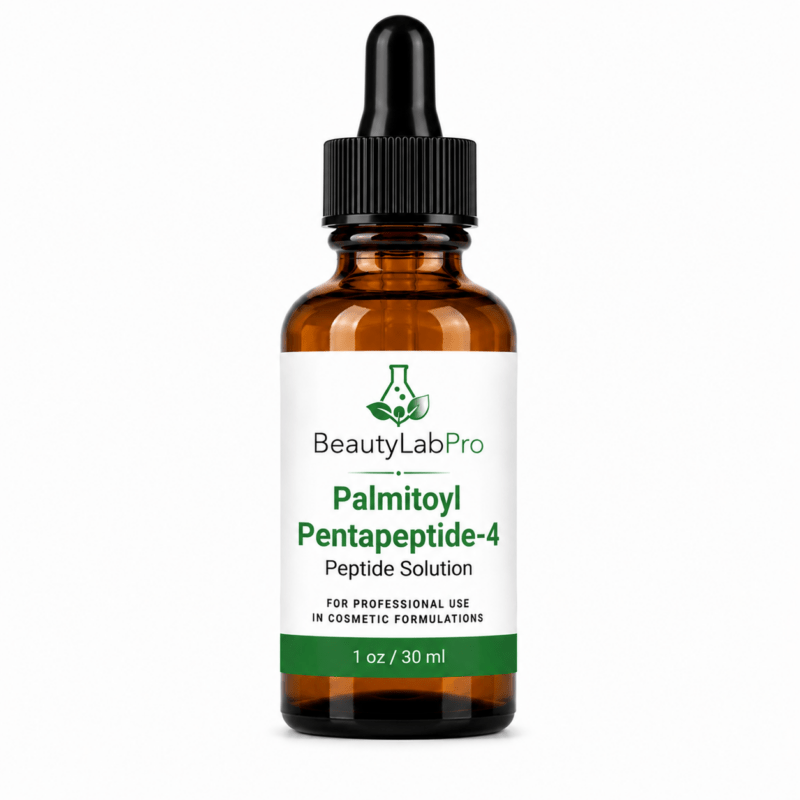
BeautyLabPro supplies Palmitoyl Pentapeptide-4 as a professional cosmetic ingredient solution—not as a finished facial serum.
Start With the Commercial Grade, Not the Peptide Name
A peptide solution contains more than an INCI peptide name: it may include a carrier and other components that determine handling and compatibility. Review the exact supplier and batch documentation before choosing a use level, pH target or processing temperature.
Where Does Palmitoyl Pentapeptide-4 Fit in a Formula?
Water-based serums and gels
Liquid peptide formats can simplify small-batch development because the active is already dispersed in its supplied carrier. Confirm the grade’s solubility and processing guidance before incorporation.
Emulsions and creams
For emulsions, plan peptide addition around the documented temperature tolerance of the supplied ingredient. Do not assume that a peptide should be exposed to the same heat as the oil and water phases used to build the emulsion.
Multi-active peptide systems
If combining Palmitoyl Pentapeptide-4 with other peptides, build a compatibility table covering carrier, pH, processing temperature, preservation and final packaging for every raw material.
Compatibility Checks That Matter
Before scale-up, check final pH, solvent load, electrolytes, chelators, preservative system, other actives and container compatibility. A stable-looking fresh batch is not a substitute for accelerated and real-time stability work.
For additional liquid peptide options, browse the BeautyLabPro Peptides collection. Product developers who prefer direct control from a dry raw material can compare the Peptide Powders collection.
Common Mistakes
Handling every “Matrixyl-type” ingredient as identical
Trade positioning, peptide identity, carrier and concentration can vary. Use the INCI and documentation of the exact material purchased rather than relying on a nickname.
Copying use levels from a different supplier
Published percentages for another commercial grade may not apply to the BeautyLabPro batch. Use the exact TDS/COA as the governing reference.
Adding a peptide without recalculating the total water phase
A liquid active contributes its carrier to the formula. Account for the full ingredient addition rather than handling only the peptide molecule as part of the batch.
Skipping compatibility testing in a crowded formula
More actives do not automatically make a better products. Complex peptide, vitamin and acid systems require deliberate stability and sensory evaluation.
Palmitoyl Pentapeptide-4 vs Powder Peptides
A solution can reduce preparation steps and is convenient for prototype work. A powder offers more control over carrier and target concentration. Neither format is universally better; the correct choice depends on batch size, processing workflow and documentation requirements.
Related cosmetic raw materials from BeautyLabPro: Argireline Peptide Solution and Matrixyl 3000 Peptide Solution. Browse the full Peptides collection.
Related guides: Oil-Soluble vs Water-Soluble Peptides: How Product Developers Choose the Right Phase and Palmitoyl Tripeptide-5 Powder in Serums vs Creams: Reconstitution, Phase Choice and Compatibility.
Shop Palmitoyl Pentapeptide-4 at BeautyLabPro
Shop BeautyLabPro Palmitoyl Pentapeptide-4 Peptide Solution for professional product development.
For cosmetic product use only. This product is a raw ingredient solution, not a finished skincare serum. Follow the exact batch documentation and validate the finished product.
FAQ
Where does Palmitoyl Pentapeptide-4 fit in a product?
Liquid peptide formats can simplify small-batch development because the active is already dispersed in its supplied carrier. Confirm the grade’s solubility and processing guidance before incorporation. For emulsions, plan peptide addition around the documented temperature tolerance of the supplied ingredient.
Are all Matrixyl-type ingredients the same?
Trade positioning, peptide identity, carrier and concentration can vary. Use the INCI and documentation of the exact material purchased rather than relying on a nickname.
Can I copy a use level from another supplier?
Published percentages for another commercial grade may not apply to the BeautyLabPro batch. Use the exact TDS/COA as the governing reference.
How is Palmitoyl Pentapeptide-4 solution different from powder peptides?
A solution can reduce preparation steps and is convenient for prototype work. A powder offers more control over carrier and target concentration. Neither format is universally better; the correct choice depends on batch size, processing workflow and documentation requirements.