Product Development Guides
Pentapeptide-18 Peptide Powder: Reconstitution, Compatibility and Mistakes
Sep
Pentapeptide-18 is increasingly relevant to product developers who want direct control over the peptide carrier, concentration and finished-product architecture instead of buying another pre-diluted active. That flexibility is useful—but it also makes powder handling, batch documentation and stability work more important.
Short answer: Pentapeptide-18 powder must be reconstituted according to the exact batch documentation, with a carrier built around the grade. Protect the peptide during processing and check compatibility before scale-up. A finished-serum percentage is not a raw-material percentage.
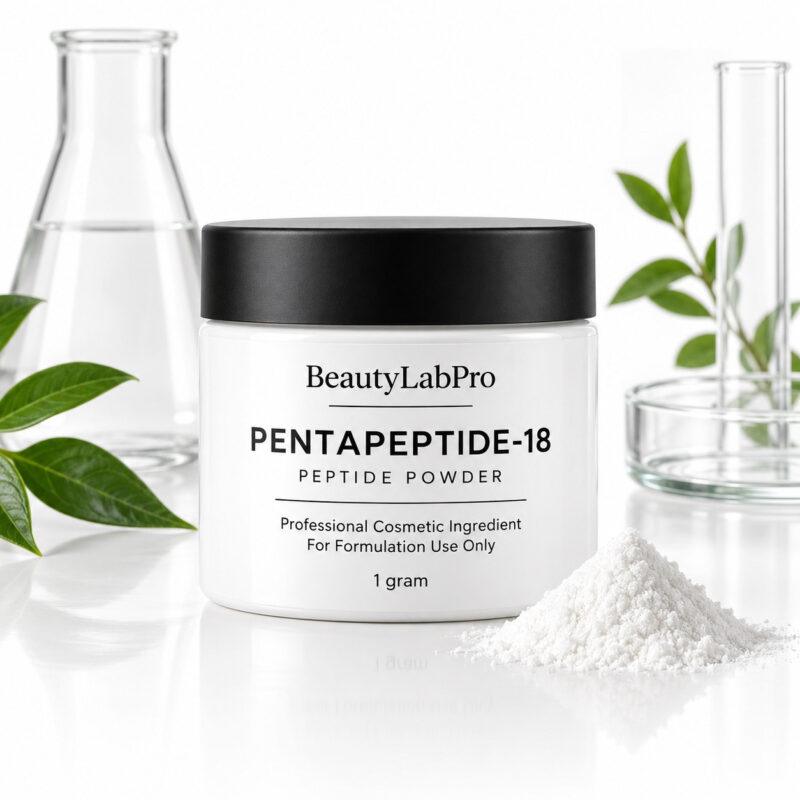
This guide focuses on product decisions, not finished-serum marketing claims. BeautyLabPro Pentapeptide-18 is sold as a professional cosmetic raw ingredient.
Why Pentapeptide-18 Powder Appeals to Product developers
Powder format lets a product developer choose the solvent system and design the finished formula around the exact commercial grade supplied. This can be useful in serums, gels, creams and other leave-on cosmetic systems where precise raw-material control matters.
However, the name of the peptide alone does not tell you the correct use level, pH window, dissolution method or processing temperature. Those specifications depend on the exact supplied grade and lot.
How to Approach Reconstitution
1. Start with the exact batch documentation
Before weighing the powder, confirm identity, assay, appearance, solubility, storage requirements and any supplier processing guidance from the COA/TDS for the supplied BeautyLabPro batch. Do not copy a percentage or solvent system from an unrelated supplier.
2. Build the carrier around the grade
If the batch documentation identifies a compatible aqueous carrier, prepare the peptide concentrate under controlled conditions and use accurate small-scale weighing. Avoid assuming that every peptide powder behaves the same way simply because another peptide dissolved easily in water.
3. Protect the peptide during processing
When heat sensitivity or processing limits are specified, follow the batch TDS. For emulsions, peptide addition is often handled in a cooler phase, but the exact temperature rule must come from the supplied grade rather than a generic internet recipe.
Compatibility Questions to Check Before Scale-Up
Evaluate final-formula pH, electrolyte load, preservative system, chelators, solvents, other actives and packaging. A peptide that dissolves successfully in a beaker still needs stability testing in the complete formula.
When building a multi-peptide system, compare the requirements of every raw material instead of choosing one universal processing condition. The BeautyLabPro Peptide Powders collection provides a practical starting point for comparing concentrated peptide options.
Common Pentapeptide-18 Mistakes
Using a finished-serum percentage as a raw-material percentage
A finished consumer serum and a concentrated cosmetic peptide powder are not interchangeable. Always calculate from the actual assay and supplier documentation for the ingredient in hand.
Copying another peptide’s pH or temperature limits
Peptide names may sound similar while commercial grades, carriers and stability profiles differ. Batch-specific documentation should override general rules.
Skipping preservation and stability testing
Reconstituting a powder creates a new system. Once water or another carrier is introduced, preservation, compatibility and microbial control become product responsibilities.
Where Pentapeptide-18 Fits in a Peptide Portfolio
Product developers comparing expression-line and smoothing concepts may also review Acetyl Hexapeptide-8 Powder and Hexapeptide-9 Powder. The choice should follow formula objective, grade documentation and compatibility—not ingredient hype.
Related guides: Hexapeptide-9 Peptide Powder: Guide, Compatibility and Common Mistakes and Palmitoyl Tripeptide-5 Powder in Serums vs Creams: Reconstitution, Phase Choice and Compatibility.
Shop Pentapeptide-18 at BeautyLabPro
Shop BeautyLabPro Pentapeptide-18 Peptide Powder in professional product sizes.
For cosmetic product use only. This is a raw cosmetic ingredient, not a finished serum. Validate the finished product for stability, preservation, safety and regulatory compliance.
FAQ
Why choose Pentapeptide-18 powder?
Powder format lets a product developer choose the solvent system and design the finished formula around the exact commercial grade supplied. This can be useful in serums, gels, creams and other leave-on cosmetic systems where precise raw-material control matters. However, the name of the peptide alone does not tell you the correct use level, pH window, dissolution method or processing temperature.
How should Pentapeptide-18 powder be reconstituted?
Before weighing the powder, confirm identity, assay, appearance, solubility, storage requirements and any supplier processing guidance from the COA/TDS for the supplied BeautyLabPro batch. Do not copy a percentage or solvent system from an unrelated supplier.
Can I use a finished-serum percentage for the raw powder?
A finished consumer serum and a concentrated cosmetic peptide powder are not interchangeable. Always calculate from the actual assay and supplier documentation for the ingredient in hand.
Where does Pentapeptide-18 fit in a peptide portfolio?
Product developers comparing expression-line and smoothing concepts may also review Acetyl Hexapeptide-8 Powder and Hexapeptide-9 Powder. The choice should follow formula objective, grade documentation and compatibility—not ingredient hype.