Product Development Guides
PDRN, Exosomes and Peptides in 2026: What Cosmetic Product Developers Should Verify Before Buying the Hype
Sep
PDRN, exosomes and peptides are all part of the 2026 skincare conversation. PDRN, exosome-inspired skincare and skin-renewal beauty language remain highly visible in 2026. For cosmetic product developers, trend visibility is not the same thing as raw-material suitability.
Short answer: PDRN, exosome-inspired ingredients and peptides are highly visible in 2026, but trend visibility is not the same as raw-material suitability. Before buying, verify the INCI or composition, source, supplier documentation and batch identity. Keep claims cosmetic and topical.
Why the trend matters now
K-beauty has pushed PDRN and biotech language into mainstream U.S. beauty discovery. For the newest source-specific discussion, read Plant-Derived PDRN vs Salmon PDRN: What Cosmetic Product Developers Should Verify in 2026.
PDRN: verify identity before the claim
The term PDRN is used broadly in beauty marketing. Before purchasing a raw material, verify the declared INCI or composition, source, supplier documentation, batch identity and intended cosmetic application. Do not assume that salmon-derived, plant-derived and marketing-described “PDRN-like” materials are technically interchangeable.
Exosomes: ask what is actually being supplied
A product developer should request clear documentation describing the supplied cosmetic raw material rather than relying on a finished-product trend name. Avoid importing in-clinic procedure claims into topical cosmetic copy.
Peptides: mature category, same documentation rule
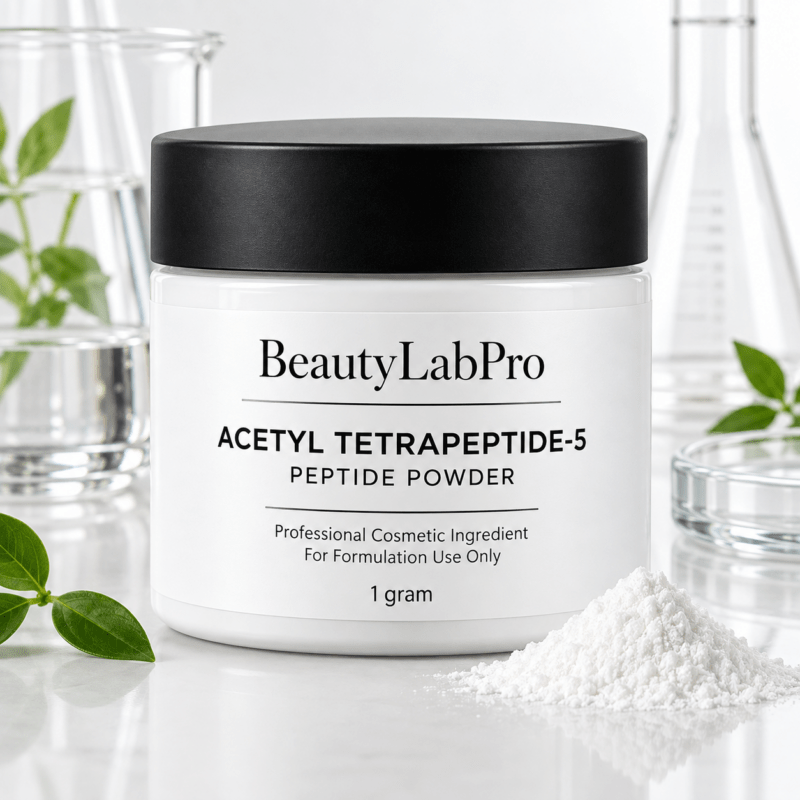
BeautyLabPro carries Copper Peptide solution and Matrixyl 3000 peptide solution. These are cosmetic ingredients, not interchangeable finished serums.
Our GHK-Cu compatibility guide and peptide powder vs solution guide show why grade and format matter.
A five-point raw-material buying checklist
1. Confirm identity
Match the commercial name to documented composition and INCI information.
2. Confirm intended use
Make sure the material is supplied for the cosmetic product context you actually need.
3. Review batch documents
Use the exact supplier/batch TDS and COA for purity, use level, pH, solubility, temperature and compatibility information where provided.
4. Separate ingredient evidence from finished-product claims
A study on a procedure, delivery method or finished product does not automatically establish the same result for a different topical raw material.
5. Design the formula around the material
For multi-peptide work, review how to combine cosmetic peptides without guessing.
How to compare PDRN sources
PDRN is discussed in two main forms: salmon-derived and plant-derived. They come from different sources, so their documentation, specifications and positioning differ, and a buyer should not assume one can replace the other. Ask the supplier for the declared composition, the source, the batch identity and the intended cosmetic use. If any of these is missing, the material is hard to describe accurately on a finished label.
Pay attention to how the amount is expressed as well. A figure in parts per million, a percentage of a solution and a percentage of a finished serum all describe different things. Compare like with like before you compare prices.
Exosome-inspired claims: what to ask
“Exosome” is often used loosely in marketing. For a topical cosmetic raw material, ask what the material actually is, which plant or source it comes from, how it is supplied and which documents come with each batch. Keep the finished-product language cosmetic and topical, describing how skin looks and feels, and do not borrow wording from in-clinic procedures.
Where peptides fit next to PDRN and exosomes
Peptides are the most established of the three categories. Their INCI names are defined, many formats are available and their documentation is usually easier to compare. That makes peptides a practical anchor for a trend-led product: a documented peptide system can carry the core cosmetic story, while a newer material adds a specific, verifiable angle.
Use cases by product type
A finished serum is the simplest way to test the trend before building your own product. A brand developing its own line may start with a peptide-led serum and add a newer material only after its documentation has been checked. For makeup, sun care or hair care, the questions are the same, but compatibility with pigments, filters or conditioning agents also has to be tested.
Red flags in trend-led listings
Be cautious when a listing uses a trend name but gives no INCI or composition, quotes an amount without saying what it refers to, or borrows results from a procedure or a different finished product. Missing batch documents, vague sourcing and promises of results beyond cosmetic claims are further warning signs. A reliable listing names the material, describes the supplied form and states what documentation is available, so you can describe the finished product accurately.
Shop PDRN and peptide products
If you want a finished example of the trend, shop the PDRN and GHK-Cu Serum with Plant Exosomes, a fragrance-free face serum that pairs copper peptide with vegan PDRN and rose and cica exosomes and ships with a batch-matched COA. Browse the full peptide serums collection for other finished serums, or the peptide raw materials above if you are building your own.
Related guides: PDRN Beyond Serums: Why the K-Beauty Active Is Moving Into Makeup, Sun Care and Hair Care.
FAQ
Is every PDRN raw material the same?
No. Source, composition, grade and documentation can differ.
Are cosmetic exosome products the same as professional procedures?
No.
What should I check before buying a trending raw material?
Match the commercial name to documented composition and INCI information. Make sure the material is supplied for the cosmetic product context you actually need. Use the exact supplier/batch TDS and COA for purity, use level, pH, solubility, temperature and compatibility information where provided.
Buy documentation, not just a trend name
BeautyLabPro focuses on professional cosmetic ingredients with product context and documentation support.