
Product Development Guides
Tired-Looking Eyes: Formulating a De-Puffing Eye Serum with Peptides
Oct
Why the eye area is a top request right now
Tired-looking eyes are one of the most common concerns clients bring to estheticians and one of the most searched topics in skincare. Late nights, long hours in front of screens, salty food, travel and seasonal allergies all show up first around the eyes as morning puffiness, a heavy look under the lower lid, shadows and fine lines at the outer corners. Many people who never used a dedicated eye product now ask for one, and men’s grooming has made de-puffing eye gels a fast growing category of its own.
For a brand or a treatment room, an eye contour product is attractive because the concern is easy to see and the client feels a difference in the mirror within a few weeks. It is also one of the hardest products to get right. The skin around the eyes is thinner, it moves all day, it sits close to the eye itself and it reacts quickly to the wrong texture. A good eye serum is built around those limits first and around actives second.
What makes eyes look tired
Three appearance concerns usually come together. Puffiness is the swollen look under the lower lid that is often strongest in the morning and fades during the day. Dark circles are shadows and color under the eye, and they come from several sources, including thin skin, visible vessels, pigment and the shape of the face, which is why no single ingredient covers every type. Fine lines at the outer corner, often called crow’s feet, become more visible when the skin is dry or when a person squints a lot.
Keep this in cosmetic language. An eye product can help reduce the look of puffiness, make the area look brighter and smoother, and keep it hydrated. It does not treat swelling caused by illness, allergy or medication, and sudden or one-sided swelling, pain or vision changes should always be checked by a physician. Saying this clearly on the label and in the treatment room protects the client and the brand.
Build the base around the eye area
Most eye contour products work best as light water gels, gel-creams or fluid serums. They spread with almost no pressure, they feel cool on the skin and they do not migrate into the eyes the way thin oils can. Avoid added fragrance and essential oils, keep alcohol low and choose a preservative system with documented use near the eyes. A short, clear ingredient list is a selling point here, because eye area clients are often the most cautious buyers.
Hydration is the foundation. Skin under the eyes that looks dehydrated shows lines more clearly and makes concealer settle into them. A ready humectant such as Hyaluronic Acid Gel, Pre-Hydrated helps build a light, slippery gel without a powder hydration step. Watch the total humectant load: too much glycol and glycerin from several raw materials at once makes the gel tacky, and a tacky layer under makeup is the most common complaint about eye products.
Peptides chosen for the eye contour
Peptides fit the eye area well because they are water soluble, work at low use levels and let a product carry a clear skin quality message without acids or strong exfoliants. The key is to match each peptide to one concern and describe its role honestly, in appearance language, using the supplier’s own data.
For the look of puffiness and bags
Acetyl Tetrapeptide-5 Peptide Solution is a clear liquid in water and butylene glycol that suppliers position specifically for under-eye puffiness. It mixes into water gels without a solubilizer, so the product stays transparent, and it is added at the end of the process when the batch has cooled. Because butylene glycol makes up a large part of the liquid, count it in your humectant total.
When one raw material should cover several eye concerns, the Dipeptide-2 and Palmitoyl Tetrapeptide-7 Eye Contour Complex combines hesperidin methyl chalcone, Dipeptide-2 and Palmitoyl Tetrapeptide-7 in a water and glycerin base. It is used in eye gels, creams, roll-ons and under-eye patches for the look of bags, and the steareth-20 in the base helps it blend into both gels and emulsions.
For fine lines at the outer corner
Many eye products pair a de-puffing peptide with a second peptide for the look of expression lines. Compare the options in the peptides collection and check the full INCI of each solution, including the carrier and preservative, before you combine them. Two well chosen peptides with documented use levels usually make a stronger story than a long cocktail at token amounts.
Texture, packaging and how the product is used
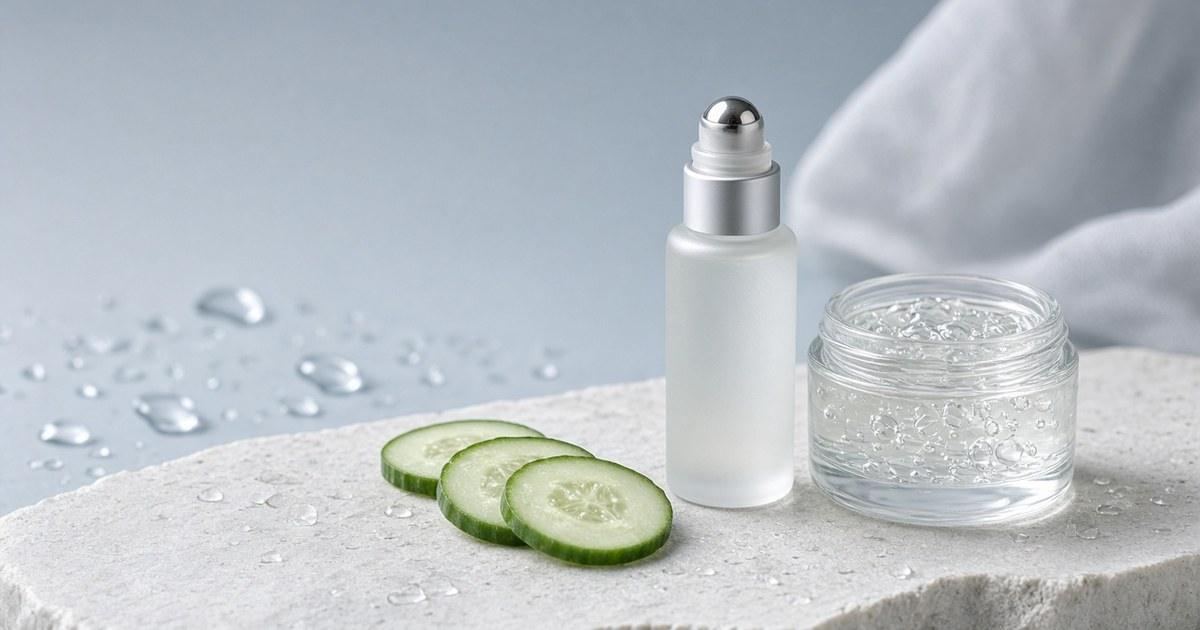
Packaging changes how an eye product performs. A metal roller ball or a cooled applicator adds a fresh, de-puffing feel and controls the dose, while a tube or airless pump keeps the formula away from fingers and air. Jars invite contamination in a product that is used daily on a sensitive area. Whatever you choose, run stability in the final package, because the applicator decides how much product lands on the skin.
Usage advice matters as much as the formula. Tell clients to apply a small amount with the ring finger or the applicator using light tapping movements along the orbital bone, not directly on the lid line, and to keep the product out of the eyes. In the treatment room, estheticians can combine an eye gel with gentle cool compresses and light manual techniques for a calmer-looking eye area at the end of a facial.
Claims and testing
Keep claims in appearance language: eyes look less puffy, the under-eye area looks brighter and smoother, skin feels hydrated and refreshed. Avoid words such as treat, heal, drain, cure or anything that names a medical condition. Phrases like ophthalmologist tested or suitable for contact lens wearers need real study data before they appear on a label. Before launch, request INCI, CoA and TDS for every raw material, follow the supplier’s recommended input range, and run an in-use test on people who actually have tired-looking eyes so the claims reflect what testers saw.
For a related formulation topic, see our Acetyl Tetrapeptide-5 vs Acetyl Hexapeptide-8 for eyes.
FAQ
Can an eye serum remove dark circles?
A cosmetic eye serum can help the area look brighter, more even and better hydrated. Dark circles have several causes, so results vary, and no cosmetic product removes them completely.
Which peptides are used for the look of under-eye puffiness?
Acetyl Tetrapeptide-5 and complexes that combine Dipeptide-2 with Palmitoyl Tetrapeptide-7 and hesperidin methyl chalcone are common choices for eye gels focused on the look of puffiness.
What texture works best for an eye contour product?
Light water gels, gel-creams and fluid serums without added fragrance are the usual choice, because they spread with little pressure and feel cool on the skin.
How should clients apply an eye product?
A small amount, tapped lightly along the orbital bone with the ring finger or an applicator, kept away from the lid line and out of the eyes.