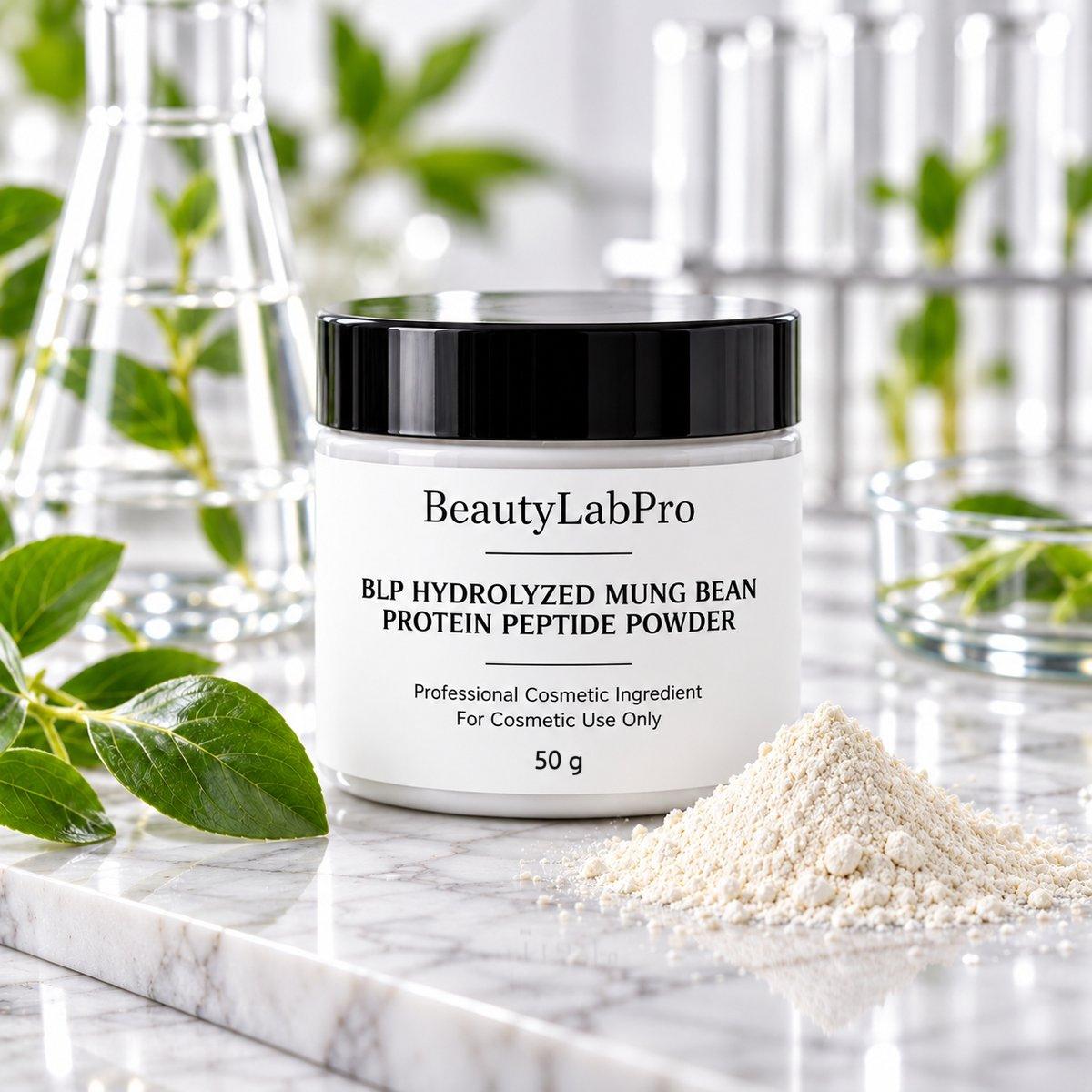
BLP Hydrolyzed Mung Bean Protein Peptide Powder
From $16.99
Mung Bean Peptide is a plant-derived, water-soluble powder from Vigna radiata. It is used in K-beauty essences, serums, creams and masks for hydration, softness and a smooth look.
Mung Bean Peptide Powder is a plant-derived active from Vigna radiata, inspired by Korean skin care. It brings naturally occurring amino acids and peptides to light, hydrating products for a smooth, balanced complexion.
What Is Mung Bean Peptide?
The supplier describes it as a next-generation plant peptide that helps condition the skin, supports moisture retention and improves the look of softness and elasticity. Its gentle nature suits products for sensitive, mature or dehydrated skin. Mung bean ingredients are a recognizable K-beauty theme.
Key Properties
Plant-derived peptides
A vegan-friendly way to add peptides and amino acids to a product.
Lightweight hydration
It gives conditioning and moisture without a heavy feel.
Gentle profile
The supplier lists sensitive skin and barrier support products among the uses.
Where It Is Used
Facial serums, essences, moisturizers, hydrating toners, sheet masks, eye care and overnight masks. The supplier lists hyaluronic acid, niacinamide, panthenol and GHK-Cu as partners; you can find them in our hyaluronic acid range, as D-Panthenol 75% and in the peptides category.
How to Use
Dissolve in the water phase at room temperature and add at cool-down. The supplier gives no use rate; start at a low level and test. Always run compatibility and stability tests on new products.
Compatibility and Technical Notes
Partners named by the supplier include ectoin, niacinamide, panthenol, GHK-Cu, Acetyl Tetrapeptide-7, tremella extract, rice ferment filtrate, green tea, sodium PCA and allantoin.
Characteristics
INCI: Hydrolyzed Mung Bean Protein (the supplier advises confirming the exact INCI). Source: mung bean (Vigna radiata). Appearance: fine cream to light beige powder. Solubility: water soluble. CAS number and use rate: not stated by the supplier.
Example: Glass Skin Essence (100 g)
Hydrate 0.2 g sodium hyaluronate in 90 g distilled water. Add 0.5 g Mung Bean Peptide Powder, 3 g glycerin, 2 g niacinamide, 2 g D-Panthenol 75%, 1.3 g aloe vera juice and 1 g preservative. Stir until clear.
Why Mung Bean in K-Beauty
Mung bean has a long history in Korean beauty routines, from cleansing powders to masks. Modern K-beauty uses mung bean peptides in essences and serums aimed at a calm, smooth, glass skin look. The ingredient gives brands a recognizable plant story, while the peptide form fits clear water-based products.
Testing Tips
Because no use rate is given, run small test batches at two or three levels, for example 0.5 g, 1 g and 2 g per 100 g, and compare skin feel, clarity and stability over several weeks.
Record the results carefully in your batch notes so the chosen level can be reproduced exactly in production later.
Storage
Store tightly sealed in a cool, dry place away from heat, moisture and direct sunlight.
FAQ
Is Mung Bean Peptide vegan?
It is derived from mung beans, a plant source.
What color is the powder?
Fine cream to light beige.
What use rate should I use?
The supplier gives none, so start low and test.
| Size | 50 g, 100 g, 250 g |
|---|
Be the first to review “BLP Hydrolyzed Mung Bean Protein Peptide Powder”
Related products
Active Ingredients
Active Ingredients
Peptide Powders

Reviews
There are no reviews yet.